
Leadership

In the AI era, CIOs need a new playbook
Consulting firm West Monroe released a report in July recommending that enterprises treat AI as a new operational layer, restructure workflows, and link AI to business KPIs. Based on a survey of over 400 U.S. business leaders, the report notes that executives face challenges such as a lack of trust, rapid model iteration, regulatory risks, and capacity constraints when reshaping operations. Report author Erik Brown emphasizes that IT leaders should avoid platform lock-in and maintain flexibility in data and infrastructure.

Home Depot Adjusts Technology Leadership Structure to Accelerate Innovation
Home Depot announced last week a reorganization of its technology team to align with the company's ongoing overall organizational changes, aiming to accelerate innovation and capture more market share. The adjustment consolidates the store, supply chain, and Pro product technology teams under the leadership of Franziska Bell, who joined the company in March as EVP and Chief Technology Officer. Home Depot has established three strategic customer experience pillars for this reorganization, focusing on streamlining core products, improving the connected shopping experience, and expanding the professional home improvement business.

Agentic AI boosts productivity, but executives struggle to deliver business value
Accenture's "Pulse of Change" report shows that agentic AI exceeds expectations in improving productivity and employee satisfaction, but only 23% of companies report quantifiable business value, down from 32% earlier this year. Experts suggest companies should focus on deep application rather than broad deployment.

AI talent demand far exceeds supply, enterprises urgently need internal skills development
According to a report released by Indeed on Tuesday, nearly six in ten employers require AI application skills in their hiring, yet the supply of qualified candidates in the labor market is severely insufficient. The survey, covering 1,001 job seekers and 300 employers, found that only 14% of workers consider themselves "AI natives." Kyle M.K., a senior talent strategy advisor at Indeed, noted that simply expanding recruitment cannot solve the problem, and companies should focus on internal skills development. Meanwhile, Gartner forecasts that global IT spending will exceed $6.3 trillion this year, but the AI skills gap still constrains technology implementation.

Lack of Employee Trust Hinders Enterprise AI Scale-Up
A global survey by TeamViewer and Sapio Research reveals that employees have lower comfort and confidence in AI than managers, with 61% of respondents wanting AI to have no independent action capabilities. Although most people use AI daily, the trust deficit limits its application scope. CEO Oliver Steil emphasizes that enterprises should pursue trustworthy autonomy rather than full automation and need to establish governance frameworks.
Large banks disclose operational transformations and increased employee engagement driven by AI applications
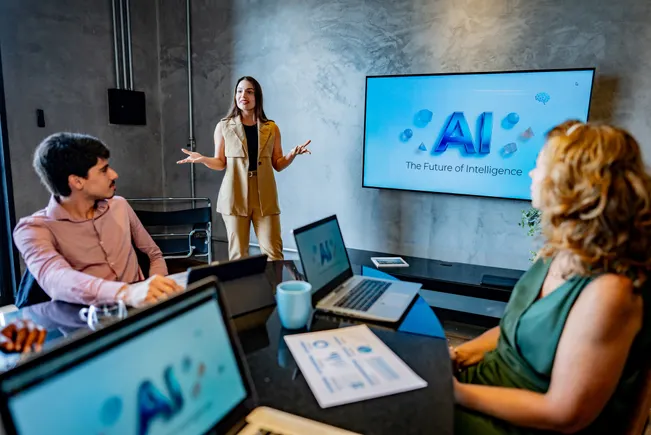
Several large banks disclosed during Q2 2026 earnings conference calls that AI tools have been deeply integrated into daily operations, with significant growth in employee usage. Bank of America has over 200,000 employees using AI capabilities, with more than 400,000 daily prompts; Citigroup has nearly 90% of employees using AI tools; JPMorgan Chase has nearly 1,000 active AI use cases, but CEO Dimon cautioned that AI costs are high, and the ultimate beneficiaries will be customers.
The Hidden Costs Behind Fragmented Office Data
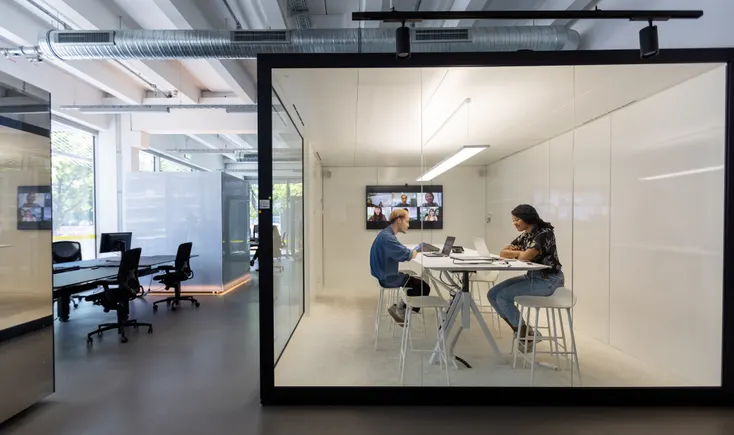
Modern workplaces have unprecedented technological density, yet data silos prevent managers from answering fundamental questions about spatial performance. Fragmented systems lead to wasted resources, delayed decision-making, and untrackable return on investment. By integrating a unified platform that consolidates space, device, system, and behavioral data, organizations can turn rooms into sources of insight, enabling scalable optimization of experience and utilization.

AI drives enterprises to re-examine cloud strategies, with hybrid cloud becoming the mainstream choice
A report released by information services firm ISG on Wednesday indicates that enterprises are shifting to hybrid cloud strategies to accommodate the growth of AI workloads. Over 80% of enterprises are re-evaluating their cloud plans to enhance operational resilience, reduce costs, and improve performance. The hybrid cloud model is evolving from a focus on workload location to unified management across diverse environments.

Ulta Beauty Appoints Domino's Senior Executive Kelly Garcia as Chief Technology Officer
Ulta Beauty announced on Tuesday that current board member Kelly Garcia will become Chief Technology Officer, starting August 31. Garcia will leave Domino's and the Ulta board, having served as EVP and CTO at Domino's for 14 years. The company's CEO stated that Garcia's insights into emerging technologies such as AI will support the company's technology-driven growth strategy.

AI Investment ROI Rises, but Returns Come from Unexpected Sources
A survey of 2,600 executives across 13 countries by SAP and Oxford Economics found that satisfaction with AI investment returns has risen to 69%, but cost efficiency is not the primary benefit; the proportion of tasks assisted by AI has increased from 25% to 30%, expected to reach 48% in two years; U.S. companies spend an average of $37.2 million on AI and see returns of $9.9 million, with returns expected to grow to $26.5 million in two years.