
The Hidden Costs Behind Fragmented Office Data
Modern workplaces have unprecedented technological density, yet data silos prevent managers from answering fundamental questions about spatial performance. Fragmented systems lead to wasted resources, delayed decision-making, and untrackable return on investment. By integrating a unified platform that consolidates space, device, system, and behavioral data, organizations can turn rooms into sources of insight, enabling scalable optimization of experience and utilization.
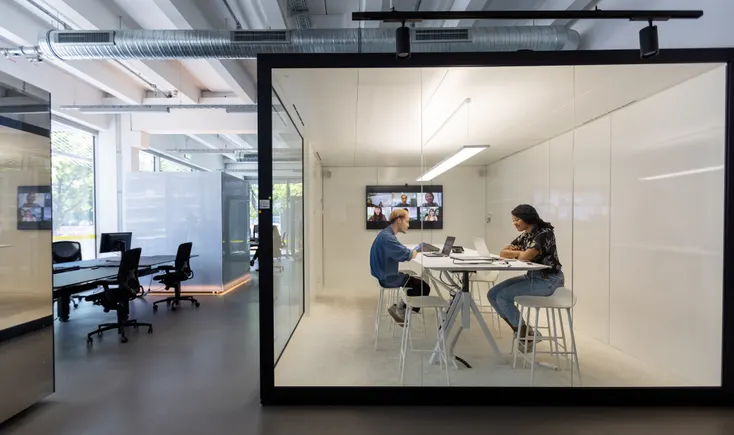
The technology that modern workplaces rely on operates at a scale greater than ever before. Every meeting room, every system, every device, and even every workflow generates data. Yet decision-makers still struggle to answer basic questions like "How is our office space performing?" The problem is not a lack of information, but rather that information is fragmented, locked away in isolated system silos.
Relying on traditional, fragmented office technology leads to a cascade of consequences: managing office space can become a "guessing game," where decisions rely more on intuition than on comprehensive information. Management cannot identify which spaces are well-utilized and which are idle, nor can they measure the impact of investments on actual outcomes, let alone provide a basis for performance optimization—essentially, they operate in a state of "flying blind."
Hidden Costs: Office Spaces That Cannot Adapt Flexibly
Without unified data analysis, organizations may face a cascade of challenges:
- Resource waste: Some spaces sit vacant for long periods, while others are in high demand;
- Poor responsiveness: Difficulty adapting to shifts in employee needs or changes in work patterns;
- Investment depreciation: Technology investments gradually lose effectiveness over time because performance cannot be measured or iteratively improved;
- Limited visibility: Insufficient visibility slows decision-making and hinders continuous optimization.
How Intelligent Insights Drive Better Outcomes
Buildinghigh-performance office spacesis the key path to bridging this gap. At its core, it involves unifying data from spaces, devices, systems, and behaviors into a single, actionable intelligence layer.
By integrating insights from multiple dimensions such as scheduling, access control, lighting, energy consumption, environmental conditions, audiovisual device health, and space occupancy patterns, organizations can gain clearer visibility to answer the following questions:
- Which spaces create the most value?
- Where do performance bottlenecks occur?
- How can friction points in work be proactively reduced?
- Which office strategy adjustments are actually producing results?
- Where should investments be prioritized for greater impact?
Turning Rooms into Sources of Insight
Imagine being able to ask a simple question—"How did our office spaces perform this week?"—and immediately receive a clear answer.
This is the power of high-performance office spaces: the space itself becomes a source of measurable insight.
All of this intelligence is enabled by a unifiedfull-stack audiovisual platform. Fragmented systems often limit access to real-time analytics or enterprise-wide visibility. In contrast, an interconnected, cloud-driven platform helps establish a single source of truth, enabling organizations to optimize space experiences, resource utilization, and overall performance at scale.
To learn more about high-performance office spaces, please refer to theeBook here。