
How Technology Empowers Training and Development for Non-Desk Employees
80% of employees globally are non-desk workers, who find it difficult to receive traditional training due to the nature of their work. Technology is providing flexible, personalized learning solutions through microlearning, mobile platforms, and data analytics, meeting employees' immediate learning needs and helping companies accurately identify training gaps.
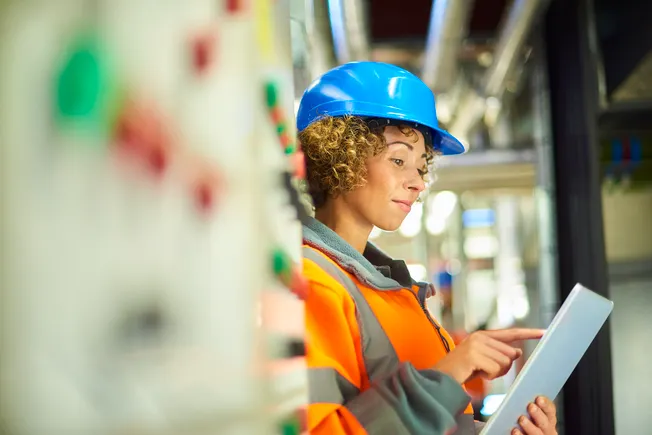
80% of the global workforce consists of deskless employees.
According to the2018 Deskless Workforce Report, this group numbers 2.7 billion people, spread across factories, retail stores, hospitals, farms, construction sites, and the transportation industry. Because these employees are constantly on the move, providing them with effective job training has become a challenge.
Whether deskless or not, employees need timely access to company policies, new products, menus, and key safety requirements—this need is real. However, most employees have little time to dedicate to learning new knowledge, Carol Leaman, CEO of the microlearning platform Axonify, told HR Dive.
"There's no longer large blocks of time to slowly digest information and think about how to apply it," she said.
Employees crave more learning programs and real-time, continuous feedback, Doug Stephen, senior vice president of the learning division at applications, learning, and outsourcing company CGS, told HR Dive in an email.
A recent survey found that more than 25% of deskless employeesdo not receive any performance feedback from their employers, and therefore also lack training to improve their skills, Stephen said.
Deskless employees: on the go and under pressure
Leaman noted that today's learners face more pressure than ever due to the accelerating pace of business change. "Technology brings a massive influx of information—emails, text messages, various chatbots—employees are constantly inundated."
Since there's no time for traditional classroom training, how can employers convey important information, provide training, and meet the development needs of deskless employees? The answer lies in the transformation of learning technology. Today, training is no longer multi-hour group sessions but fragmented information blocks, tailored to employee needs and accessible anytime on phones and tablets.
"The focus is on improving the learner experience, increasing engagement, and adding visual learning," Jeff Carr, CEO of the mobile learning platform Inkling, told HR Dive.
These changes reflect a broader shift in how companies approach training, Carr said: "In the past, even over the last decade, training was often an annual, semi-annual, or quarterly event."
Employees typically received extensive training at onboarding and then again during scheduled formal events. But with the shift from paper to mobile technology, employees can easily access information and always have the latest content, he said.
Making learning accessible anytime, anywhere
Beyond technology, two other factors are driving the revolution in corporate learning, Leaman said. The needs of modern learners have changed dramatically over 15 years, with many people having to sift through more information in less time.
"Interestingly, there have been major advances in brain science and cognitive science," Leaman said. This research focuses on how the brain retains information. "We now know that people do what they remember. If they don't remember, they guess. So how do you get people to remember rather than guess or simply not do it?"
This insight has driven learning toward micro-content formats that focus on key knowledge points, accessible to employees on mobile devices when needed.
Typical use cases include: restaurant employees checking recipe cards, operation manuals, or reference materials to learn about new promotions, Carr said.
Or medical device sales representatives can access and learn about new product information, launches, and new pharmaceutical knowledge. Fitness club employees can check the day's workout content each morning to teach classes; field service technicians can quickly review troubleshooting tips for common issues before entering a customer's home.
Beyond on-demand access to information, the analytical capabilities of learning technology are also crucial, Carr said. Micro-lessons can include quizzes, with results aggregated into dashboards to help employers identify knowledge gaps—whether by geographic area, region, or specific store.
This helps determine whether knowledge deficiencies stem from insufficient training emphasis or insufficient training time. "The precision that analytics brings is truly remarkable," Carr said.
It's not just deskless employees who benefit from advances in learning technology.
With mobile devices now deeply integrated into daily life, next-generation technologies like augmented reality (AR) and virtual reality (VR) are gaining broader adoption, and training programs can be portable for everyone, Stephen said. Office workers also benefit from mobile-optimized training, collaboration, and continuous performance evaluations, he added.
When five generations coexist in the workplace, is anyone at a disadvantage due to reliance on technology-based training?
"Interestingly, we see almost no differences across demographic groups or even job roles," Leaman said. "We're pleased to find that this learning approach actually appeals to people of all ages."
The future of learning technology
Although learning technology has changed dramatically over the past five years, there is still significant room for growth.
Discussions about microlearning are becoming increasingly common.
"Fortunately, some leading organizations understand that having a high-performing, knowledgeable workforce is a competitive advantage," Leaman said.
Five years ago, companies didn't believe in the effectiveness of short lessons or that gamification could boost engagement. Today, because employees demand microlearning over multi-day training, these have become mainstream in the learning technology space, she said.
She added that the potential of artificial intelligence and machine learning in employee development is far from fully tapped.
"Technologies like AR have permeated industries from telecommunications to manufacturing," Stephen said, "and they will only become more prevalent, giving remote workers greater flexibility in their jobs."