
The 5G wave is coming, but most hospitals remain cautious
Rush University Medical Center is about to release preliminary results from the nation's first hospital 5G network, but most healthcare systems are still watching. AT&T, Verizon, and other operators are accelerating deployment, while hospitals face multiple considerations of cost, security, and returns.
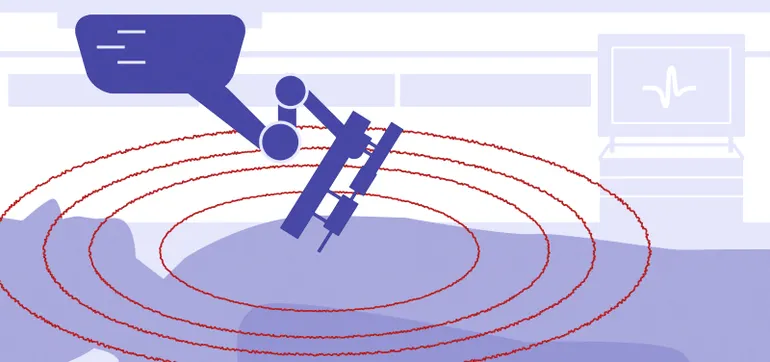
As Rush University Medical Center plans to release preliminary test results of its hospital 5G network within months, the U.S. healthcare system is in a state of watchful waiting—most institutions are reluctant to take major action on 5G deployment until the technology direction becomes clear.
AT&T announced 5G coverage for Rush in January, marking one of the first concrete attempts to bring 5G technology into healthcare. Although experts expect limited industry-wide changes in the short term, potential benefits include the proliferation of telehealth, stronger patient control over personal health information, streamlined hospital communication processes, and reduced costs.
"How will healthcare work without a reliable network that can receive information instantly?" Shafiq Rab, senior vice president and chief information officer at Rush, told Healthcare Dive.
Telecom experts point out that 5G networks will be able to carry 1,000 times more traffic than current 4G LTE, with speeds up to 10 times faster. This means a high-definition movie could be downloaded to a phone in less than a second.
Verizon, T-Mobile, and Sprint did not respond to requests for comment on hospital 5G expansion plans, but all three carriers (along with AT&T) are accelerating in the global 5G race. Verizon's service is currently available in four commercial markets; T-Mobile plans to launch its network in the second half of 2019 and achieve nationwide coverage by the end of 2020; Sprint's 5G network will launch in four cities in May and expand to five additional cities in the first half of the year.
AT&T has gone the furthest in geographic coverage, with its 5GE (a transitional coverage between 4G and 5G) now covering 12 U.S. cities. The Fortune 10 telecom giant plans to add seven more cities in the first half of this year alone.
Health systems are interested, but keeping their distance
"We are very excited about the potential of 5G both inside and outside our many facilities," Marc Probst, chief information officer at Intermountain, told Healthcare Dive, but he also noted that it is not yet clear when 5G capabilities will mature enough to support health system needs. "We do believe that over time, 5G will be a game-changer," he said.
Mayo Clinic told Healthcare Dive that it is also tracking developments in the mobile carrier industry, but 5G installation is not in its "near-term plans." A spokesperson said: "It's hard to say whether we will implement 5G within a few years."
Most large health systems remain silent on 5G commitments. Several chains, including Community Health Systems, Ascension, and Dignity, declined to comment, citing reasons such as uncertainty about the technology.
"The biggest issue we face is that many people don't understand what 5G is and how it works," Maria Lensing, vice president of AT&T's global healthcare business, told Healthcare Dive. "Any hospital should at least understand: what 5G means, what it will do, and which use cases will affect my hospital environment."
But that doesn't mean there's no interest. As 5G coverage expands nationwide, more retail clinics, doctor's offices, hospitals, and other healthcare facilities will be included in its coverage. Lensing said AT&T is expanding its hospital testing program beyond Rush.
"We are having conversations with other hospitals," Lensing said. "We are actively negotiating with several—I should say a number of them—and they are at the stage of signing trial contracts."
What does it cost?
According to Accenture, the U.S. wireless industry is expected to invest $275 billion in deploying 5G networks over less than a decade to support these new use cases. Hospitals may also need to bear corresponding costs. Although telecom companies own small cell equipment and can benefit from hospitals using their cellular services, that doesn't necessarily mean they will pay for 5G installation.
"It depends on the agreement between the hospital and AT&T," Lensing said. "Some hospitals are willing to pay for it. In fact, most hospitals are willing to invest."
Although AT&T declined to disclose specific financial details of the Rush installation project, saying only that pricing "varies by project," Rush's Rab told Healthcare Dive that the medical center paid approximately $500,000 for one building.
However, Rab said 5G will save healthcare organizations money in the long run. Currently, each cable connecting a computer to the network costs $1,200 to $2,000, potentially totaling $1 million per building. Installing 5G could cut that cost in half.
Although 5G small cell installation is a significant upfront investment, it can save hospitals money in the long term in a challenging financial environment. The savings are especially important for small or rural healthcare organizations.
"Large hospitals—all the fiber will be connected. But for small hospitals or clinics, I can't spend millions of dollars laying cables, yet we still need to support phones and computers. What 5G will do is become the primary way they get coverage," Rab said.
Return on investment
5G has the lowest latency of any cellular network to date, meaning network responses require almost no waiting time. Rab said this means increased reliability for time-sensitive medical activities or requests, and 5G's greater capacity allows it to process more data faster. Wireless networks will be able to support more connected IoT medical devices—including those that can connect patients with caregivers.
"There are potentially huge benefits to using 5G in healthcare," John Windhausen, executive director of the broadband nonprofit SHLB Coalition, told Healthcare Dive, especially real-time monitoring of patient health and mobile care.
Some potential use cases Rab revealed include: surgeons using robots for real-time remote surgery, or patients obtaining copies of their MRI scans in the blink of an eye. More broadly, supporters say 5G can enhance in-hospital mobility and communication, freeing doctors from desktop computers and nurses from workstations.
According to the Brookings Institution, the dense clusters of small cells needed for 5G connectivity—micro base stations about the size of a shoebox—could make 5G networks more resilient to natural disasters, meaning more hospital functions would be preserved during severe weather events.
If that sounds futuristic, it's because it is. Currently, Rush is only testing the technology in what Lensing calls "peripheral" or "adjacent" clinical applications that don't directly affect patient health, such as communication between nurses and doctors.
According to Lensing, all types of hospitals (rural, urban, teaching, specialty, etc.) can benefit. "Hospitals vary by type," she said, noting that a common thread among interested organizations is that they have a C-level technology executive who wants to digitize patient interaction and patient experience.
Is it safe?
But as 5G expands, health concerns are also growing. Some health advocates worry about beaming low millimeter-wave radiation at the nation's most vulnerable citizens. Some health advocates are concerned about the lack of specific research on the effects of 5G radiation—especially when these devices are so close to patients.
A 10-year, $30 million study by the National Toxicology Program (NTP) found that male rats exposed to high concentrations of cellular radiation developed cancerous heart and brain tumors, but researchers clarified that it is difficult to extrapolate effects on humans from the results.
5G is different from the 2G and 3G radiofrequency radiation used in the study. It relies on the deployment of dense wireless networks and hundreds of thousands of new small cells, meaning more energy will be transmitted through high-frequency spectrum into the air, toward smaller transmitters in homes, workplaces—and now hospitals.
"5G is an emerging technology that hasn't really been defined yet. Based on our current understanding, it's likely to be quite different from what we studied," said Michael Wyde, lead toxicologist on the NTP study.
5G broadcasts on the gigahertz millimeter-wave band, a portion of the spectrum never before used for cellular communications. Experts say these tiny, high-frequency waves bounce off buildings (prompting the use of small cells to address this), but tend to be absorbed by natural objects such as plants, rain, and the outer layer of human skin.
The physician organization "Physicians for Safe Technology" notes that potential skin, eye, whole-body metabolic signaling through skin sensors, negative thermal effects, and carcinogenic effects are concerning, although evidence of harmful effects of radiofrequency on human health is scant or nonexistent (and studies are also extremely limited).
"We are flying blind on health and safety," Republican Senator Richard Blumenthal of Connecticut said at a February Senate Commerce, Science, and Transportation Committee hearing, after industry representatives noted that, to their knowledge, there are currently no industry-supported studies.
"Standards for 5G haven't been set yet," SHLB Coalition's Windhausen told Healthcare Dive, though he noted there is no conclusive evidence that cellular radiation causes negative health effects. "If you look at the power levels we've already been bombarded with, it's enormous. There's no evidence that TV signals have caused harm."
Most federal and industry officials largely dismiss concerns about negative health effects, arguing that radiation exposure, if any, is minimal, and that despite the surge in cell phone use, brain cancer rates have barely changed in recent years. According to the FDA and the World Health Organization, mainstream science has not found a causal relationship between radiofrequency fields below FCC exposure limits and adverse health effects.
Both Rab and Lensing agree that dedicated research on 5G will be needed in the future. In Lensing's view, the impact of 5G expansion on U.S. health should not differ significantly from the adoption of past 4G, 3G, or 2G cellular technologies, although experts remain not entirely certain about long-term consequences due to the lack of research.
"Will today's 4G radiation be weaker or stronger than tomorrow's 5G radiation? I can't find any studies on 4G radiation," Lensing said. "Can you?"