
AI Takes Over Drive-Thru Ordering: The Wave of Technological Innovation in the Fast Food Industry
Drive-thru ordering efficiency has long been stagnant, but now a group of technology companies are reshaping this scenario through AI, license plate recognition, and personalized recommendations. Companies such as 5Thru, Valyant AI, and ZIVELO have launched related solutions, while giants like McDonald's are actively piloting them. Data shows that drive-thrus account for 60% to 70% of fast food sales, and the average service time has increased from 190 seconds in 2003 to 234 seconds in 2018, making technological upgrades key to breaking through the industry's bottleneck.
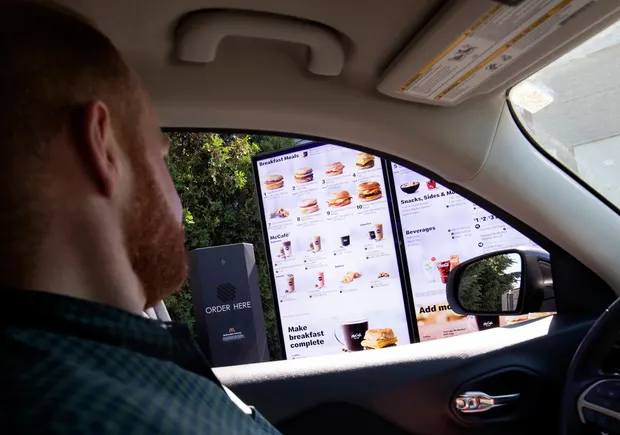
The morning drive-thru line often stretches 15 cars deep, which frustrated 5Thru founder Daniel McCann—he just wanted a coffee. As a payments expert, he knew the window payment step takes 23 to 25 seconds, and combined with cooking time, the cost of waiting in line is significant. For this reason, he often skips the drive-thru and heads to the office on an empty stomach.
McCann believes there must be a better solution. He told Restaurant Dive: "The drive-thru is one of those things that still operates the way it did 50 years ago, largely ignoring the new technology available today. I think it's time for a complete overhaul and a move into the 21st century."
His drive-thru technology company, founded last year, is building systems and platforms to enable everything from automatic payment processing via license plate recognition to conversational AI taking orders and handling transactions. The company is also developing a solution that lets customers order from their cars on the way to the drive-thru, so they only need to pick up their food upon arrival, further reducing wait times.
Companies like ZIVELO, Dynamic Yield, and Valyant AI are also offering similar solutions, aiming not only to reduce drive-thru times but also to optimize the overall customer experience.
Why change is imperative
Reducing drive-thru times is crucial to the long-term success of fast-food restaurants, especially given that this channel contributes 60% to 70% of sales. In recent years, service speed has declined while the number of items per transaction has increased. According to QSR Magazine data, the average drive-thru service time was 190 seconds in 2003, rising to 234 seconds by 2018. Rob Carpenter, founder of Valyant AI, told Restaurant Dive that saving a few seconds could be the dividing line between growth and stagnation for chains. His company is also developing an AI drive-thru platform.
Carpenter noted that the fast-food industry is highly competitive, and many restaurants have used expansion as a growth strategy in recent years, but the market is now oversaturated. At the same time, due to consumer demand for low-price value menus, fast-food restaurants face pressure from rising labor costs and shrinking profit margins. He said that apart from technology, there are few growth avenues left.
"The drive-thru is one of those things that still operates the way it did 50 years ago, largely ignoring the new technology available today. I think it's time for a complete overhaul and a move into the 21st century." — Daniel McCann, founder of 5Thru
Consumers are also becoming more accepting of technology integrated into various aspects of their lives. Stephane Wyper, Senior Vice President of New Commerce Partnerships at MasterCard, said at the National Restaurant Association Show (NRA Show) in May that the average American household owns 5.2 smart devices. MasterCard is expanding its presence in the foodservice sector through technology and earlier this year partnered with self-service kiosk provider ZIVELO to test AI menu boards at Sonic.
ZIVELO CEO Healey Cypher said at the NRA Show that the widespread adoption and seamless integration of digital self-service kiosks across multiple channels, such as gas stations and airport terminals, signals the technology's promising future in the restaurant industry. "Point of sale is becoming smarter," Cypher said. "It's changing; it's no longer just a person taking orders."
McCann said that voice ordering and AI have existed for years, but only recently have they been applied to the restaurant industry, and voice technology's accuracy is now better than ever. "Voice technology has reached a stage where it is commercially viable," McCann said. Many restaurants are also willing to try it.
The new drive-thru experience

According to QSR Magazine, McDonald's has invested the most in improving the drive-thru experience, although some of its locations have slower service times. The company is testing an automated voice drive-thru system, streamlined its late-night menu, and cut time-consuming premium items from its daytime menu. Its acquisition of Dynamic Yield, which focuses on drive-thru personalization technology, has also opened up broader possibilities for drive-thru technology applications.
McDonald's CEO Steve Easterbrook said in an April earnings call with investors that Dynamic Yield's technology has been rolled out to 700 drive-thru locations in the U.S. "Over time, using the data from the millions of customers we serve daily, the technology will become smarter through machine learning," Easterbrook said. "And, through data collected based on current drive-thru traffic, the technology will begin to recommend items that help alleviate operational and staffing pressure during peak hours."
The fast-food giant is far from the only chain exploring ways to improve the drive-thru experience. Valyant AI is testing its platform at Good Times Burgers & Frozen Custards in Denver, where an AI named "Holly" takes and processes orders. The company told Restaurant Dive that beyond Good Times Burgers, they have held discussions with several large chains, franchisees, and smaller operators.
The biggest difference AI makes is that it can provide more consistent customer service compared to human employees. Given that overall customer satisfaction with fast food has declined relative to casual dining, retaining loyal customers is now more important than ever.
"Whether you buy a Big Mac in Anchorage, Denver, or New York, the product and experience are largely the same," Carpenter said. "But we've all seen that customer service can vary greatly. You might encounter an employee who doesn't love their job, or you might encounter one who is very focused and striving to align with management."
Ongoing labor shortages also make it difficult for fast-food restaurants to maintain consistent service quality and efficiency. Carpenter noted that if only one person is assigned exclusively to the drive-thru, it means fewer staff for food prep, cleaning, and other roles that could improve the overall experience. Through automation, restaurants can free up employees from drive-thru positions and flexibly reassign them in-store to other roles, including those that are hard to fill.
"Ultimately, we'll see fast-food employees handling complex edge cases and interacting more with customers at the window, while being more productive and moving customers through faster," Carpenter said.
Upsell rates are also expected to improve, as AI can be programmed to upsell 100% of the time, whereas human employees typically do so only 40% of the time. This means higher average ticket sizes and potential revenue.
"Whether you buy a Big Mac in Anchorage, Denver, or New York, the product and experience are largely the same. But we've all seen that customer service can vary greatly." — Rob Carpenter, founder of Valyant AI
AI platforms can also help restaurants better collect customer data, something that was difficult to achieve with static menus in the past. Ben Gaddis, president of T3, told Restaurant Dive that drive-thrus can use voice recognition to identify customers and link their orders to loyalty programs. T3 is developing facial recognition technology that can identify customers at the drive-thru and credit orders to their loyalty accounts. The program, in partnership with Olo and Punchh, can handle payment processing, product recommendations, and more.
McCann said these AI systems can also provide personalized recommendations based on historical orders. The data collected also helps restaurants understand regional customer differences, such as how ordering habits differ between consumers in Boston and Austin, Cypher said.
"Not all menus should be the same because we all have different needs. Menus should adapt to that—whether it's nutritional needs I or my wife might have," Wyper said in an interview with Restaurant Dive.
Improving the customer experience
In addition to offering more personalized service, AI can also improve service speed. According to a press release, in the breakfast pilot at Good Times Burgers, Valyant AI reported a 7-second reduction in wait times. The company expanded platform testing to lunch and dinner in June, and given that orders during these periods may be more complex, it could further improve service efficiency.
Carpenter said Good Times Burgers customers have responded positively to using AI at the drive-thru. Although there was initial resistance due to poor experiences with automated phone trees in the past, biases and preconceptions were quickly dispelled. During the test, Valyant added signage informing drive-thru customers they could request a human attendant to opt out of AI ordering. Carpenter had expected an opt-out rate of 50% to 60%, but the actual rate was only 5%.
The company also noticed that customers quickly began interacting with "Holly" as if she were human, saying "thank you" to her, so the company programmed the system to respond with "you're welcome," adding an extra element to the interaction. "It's a cool, unexpected experience," Carpenter said. "When customers arrive at the window, they're naturally in a better mood."
AI can also be used to handle orders in different languages, providing more consistent customer service across locations. Wyper said MasterCard and ZIVELO's technology uses natural language processing and underlying technology to help distinguish accents, customer intent, and actual order content. "It can be fully customized. Whether it's Spanish, French, or German, you can build technology now to ensure every customer interaction is understood," Wyper said.
Cypher said the technology also allows multiple people to order simultaneously, as seen in Sonic's multi-lane drive-in menu board scenario, where customers don't have to wait in line or for an attendant to be free. Valyant AI's "Holly" also uses natural language processing technology, and the company is working toward making the platform multilingual eventually. "We think this will be a huge value proposition and help break down language barriers when ordering," Carpenter said.
Emma Liem contributed to this article.