The Boundaries of Hybrid Work: Which Roles Cannot Go Remote
The pandemic has driven the adoption of hybrid work, but in industries such as power, construction, and healthcare, many critical tasks still require physical presence. This article cites insights from several industry executives, analyzing the applicable boundaries, technological challenges, and future trends of hybrid work.
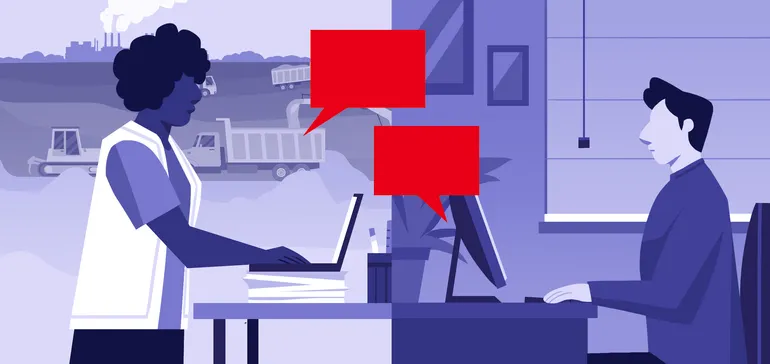
In the era of COVID-19, it's easy to view work as an experience that flows between virtual and physical spaces. However, certain functions are not suited for seamless connection between remote and on-site employees.
Imagine a power plant where safety requirements are a matter of life and death for workers and nearby residents. Colin Parris, Senior Vice President and Chief Technology Officer at GE Digital, points out that physical oversight is necessary, such as detecting whether a screw has rusted due to smoke from a chemical plant 10 miles away.
"For such things, you need people physically present," Parris said.
The rust on the screw is a subtle detail that wouldn't catch a manager's attention in the background of a Zoom call. This is what business leaders callthe limitations of hybrid worktype of issue.
Most companies discovered and addressed the short-term pressures of remote work in 2020, a phase focused on "firefighting." Now, companies are tackling obstacles to shaping long-term hybrid work models. For some companies, hybrid work means splitting time between home and office, letting employees choose their location.
For others, it means fully on-site employees need to coordinate seamlessly with remote managers or operators, which is particularly challenging in industries like healthcare, construction, or engineering.
Irvin Bishop Jr., CIO of engineering and construction firm Black & Veatch, says the pressure to ensure employees are "always connected to the right applications" to maintain operations has increased dramatically. "From a technical standpoint, we can't control home networks and bandwidth."
When considering where hybrid work applies, business leaders estimate that 57% of their employees can work fully remotely, while nearly two-thirds can work remotely at least part of the time, according to Gartner. Although hybrid work is becoming the dominant model, Gartner says it is only feasible for 50% to 60% of employees.
The next phase of hybrid work focuses on gaps that technology cannot bridge. Technical tools can help alleviate long-term operability concerns, but not without challenges—whether due to the nature of the work or the added strain of adding more systems to the tech stack. Despite progress by companies traditionally requiring on-site work, there are places where hybrid work simply doesn't work.
Construction and Engineering: On-Site Demands
The challenge of managing physical spaces in the post-pandemic era is how to seamlessly connect on-site workers with experts who can provide remote insights.
"I can't fly a top engineer to every plant we start up," Parris said. "You'll have on-site personnel... and then establish a connection with that person."
For the construction industry, this disconnect is evident. Construction cannot be done on Zoom—at least not yet.
"I think it would be foolish to say we can make construction management operations fully remote," said Matt Daly, CEO and co-founder of StructionSite. Daly's company makes a platform that monitors construction sites using 360-degree cameras worn by users and AI technology.
"Every company will deal with the struggle of being half-remote, half-on-site, or some combination of the two."
—Erika Flora, Co-founder and CEO of Beyond20
While tasks such as visually supervising walls before installing drywall may suit a hybrid model, other tasks must be performed on-site.
"If you need to physically test a valve to ensure it works properly before a building is put into service, that's something you can't do remotely," Daly said.
The challenge of connecting the digital and physical worlds varies across industries. According toMcKinsey research, companies in financial services and insurance can perform up to 76% of their work remotely while maintaining efficiency, while in manufacturing that figure is 19%. Construction industry employees can work remotely about 15% of the time, while agriculture drops to 7%.
In engineering,digital twinsare both a digital metaphor for the hybrid work disconnect and one of the solutions. Using data, digital replicas of real physical components can help predict failures and assist in management.
When the pandemic caused disruptions, companies hoping to postpone maintenance turned to digital twin technology to understand what might happen. Parris said that without flying to a plant in the Middle East, GE could predict the "amount of accumulated damage" and determine whether it was safe to postpone maintenance.
Adoption stems from necessity. As more work becomes "technology-enabled workflows," tools help provide performance metrics that allow individual employees to self-manage, self-monitor, and stay on track, said Nathan Ray, healthcare and life sciences director at West Monroe.
In 2021, addressing such challenges will put more pressure on the IT backbone supporting companies. After a year of financial constraints, global technology spending will showsigns of improvement。
"The wave of automation will let you manage operations with fewer people and more remote control," said Sam Dawes, managing director of West Monroe's consumer and industrial products business. More monitoring, management, and exception control can be done remotely, reducing the time spent directly supervising the execution of specific tasks.
"I think it would be foolish to say we can make construction management operations fully remote."
—Matt Daly, CEO and co-founder of StructionSite
Black & Veatch is piloting wearable devices to reduce the number of people who need to be physically on-site.
"One person can go on-site and view something through a wearable device, and others working remotely can see the same real-time activity," Bishop said. "People with different expertise on the team can suggest what should be done without having to be physically present all the time."
Through sensors and IoT devices throughout facilities, the company hopes to reduce the need for physical presence on-site and help provide decision-ready information directly on-site.
Healthcare Synchronization: Challenges and Workarounds
Hybrid work introduces expectations of flexibility; because employees can perform well in a home office, workflows should adapt to this. According toPwCdata, more than half of employees want to work from home at least three days a week.
Hybrid work models imply asynchronicity, which puts pressure on the natural rhythm of work in fields like healthcare. This shift has created a need to manage schedules to maintain operations.
Employees in healthcare and social assistance, as defined by McKinsey, canwork remotely 20% of the time。
When the pandemic hit, it immediately pushed many care and administrative workers into a fully virtual workforce, said Tom Kiesau, director and digital health lead at The Chartis Group.
Some organizations were ahead on technology, offering patients online scheduling for in-person visits once non-essential care began to resume.
But "they didn't have a way to schedule virtual visits online," Kiesau said. "Paradoxically, if you wanted to schedule a virtual visit, you had to call the call center, and sometimes even call the doctor's office separately."
The overall issue for remote operations in healthcare has been scheduling, Ray said.
An organization's ability to coordinate employee workflows and synchronize them in video conferences or actual physical contact is helping determine winners and losers in the hybrid work shift, Ray said.
As work happens offline and online, simple scheduling calendars are no longer sufficient, requiring more robust rules-based software to ensure work can continue within specific time frames. "Scheduling, whether it's patients, workforce, or assessments, all these concepts are actually very difficult for these enterprises," Ray said.
Technology tools are helping coordinate healthcare operations. If synchronizing the availability of practitioners or other employees for appointments is difficult, workflow management software can be used to confirm whether healthcare workers are available and whether they will show up. Physical access management technology can assist with on-site capacity control.
Technology, processes, and culture are "moving toward a more hybrid work environment," said Laurent Bataille, executive vice president of digital energy at Schneider Electric. The company makes technology that lets healthcare workers pre-book spaces, indicating they will be at a specific location at a specific time.
Managing employees through a hybrid model is another challenge for healthcare leaders, which workflow management tools can alleviate by adding a layer of self-monitoring, Ray said.
Technical Debt: An Obstacle to Hybrid
Although the pandemic did catch most companies off guard technologically, problems persist even a year after the disruption began.
According to a survey conducted by Info-Tech Research at the end of 2020, four in ten companies said they still need at least 12 more months to operate without a central work hub. Technical debt on the platforms supporting work cantrap a company's development cycle. A Stripe study found that engineers spend nearly a third of their time ontechnical debt.
To seamlessly connect home and on-site employees, executives are turning to technology tools and policies to address the disconnect challenge.
Across organizations, technical debt can affect companies trying to onboard employees or manage workflows in a hybrid work environment, said Erika Flora, CEO and co-founder of IT consulting firm Beyond20. But the bigger obstacle lies in designing processes and technologies specifically for hybrid environments and introducing clarity throughout the organization.
"Every company will deal with the struggle of being half-remote, half-on-site, or some combination of the two," Flora said.
This is a task CIOs can assist with by helping companies understand "how work flows from one team to another," Flora said.
Another obstacle is understanding the availability of IT assets, such as hardware and software, and thinking about managing infrastructure in a hybrid model. While collaboration tools are a necessary layer to connect the two, analystsworry about message overload, as new features emerge.
Manufacturing executives struggle with technical debt in their facilities, Dawes said. Under financial constraints, when faced with choosing between factory equipment or collaboration tools to address hybrid work issues, managers often choose the former.
"Last year really forced us to confront this issue," Dawes said.
CIOs in manufacturing find addressing digital sales and services challenging, as their organizations require them to maintain the sales experience, relationships, and customer service that customers are accustomed to in a hybrid model.
In turn, the increased digitization of work puts more pressure on IT functions. As offices are remodeled around a hybrid workforce, new technologies such as audio and video are added to IT workloads, said Kaumil Dalal, director of technology practice at West Monroe.
Office technology needs to shift to become "more engaging, more inclusive, when you think about the new hybrid workplace," Dalal said.
Companies are pushing cloud migration to ensure systems can betterrespond to changes in customer patterns. But in their technical backlog, some organizations still have updates critical to a hybrid workforce, such as optimizing legacy applications for mobile access.
Addressing connectivity issues for employees operating from kitchens and living rooms remains an obstacle for many organizations. Areportreleased by Navisite in October points out that insufficient home bandwidth is the top concern for IT leaders and executives when considering long-term support for remote employees.
At Black & Veatch, a group of IT workers became experts in managing connectivity issues, triaging home networks and coaching employees on why their home internet speeds were low.
"We call them 'tuning experts,'" Bishop said. "Honestly, they've been a huge help to me."
Why Hybrid and What's Next
Overcoming hybrid work obstacles is attractive to businesses. Companies that can overcome challenges and develop strategies around where hybrid work is best applied will gain operational, financial, competitive, and cultural advantages.
Companies that can make hybrid work deployments adaptable and sustainable will gain a "huge competitive advantage," Dalal said. Flexible work has become somewhat of an expectation, forcing leaders to consider employee experience in the context of hybrid work.
Hybrid work brings work-life balance advantages for employees, but also technical efficiencies and operational cost savings, said Jeff Frey, vice president of innovation at Talent Path. Companies can reduce employee commuting costs and convert that into profit, benefits, better products, or customer improvements.
"I don't know the scale, but certainly many companies are looking at it," Frey said.
"From a technical standpoint, we can't control home networks and bandwidth."
—Irvin Bishop Jr., CIO of Black & Veatch
But completely eliminating offices is not possible for most companies, as they say some employees will workpart-time on-site, and Gartner data shows that at least 50% of employees want to return to the office.
Hybrid work does make leaders rethink their real estate strategies, worried about "too many square feet being used improperly," often rows of cubicles that are "not necessarily the most engaging work environment," Bataille said.
In the long term, business leaders also need to address supporting company culture through the disconnect assumed by hybrid work. According toWest Monroe data, this is the top concern for 60% of executives in the shift in work patterns.
Executives need to optimize key processes and their supporting technologies in the long term. But the hybrid work shift will place more parts of the organization in a new context, including how companies view specific positions.
"For example, a customer service representative who today might work fully remotely," Dalal said. "What would that model look like, and how would their role definition change?"