
Satellite Internet: A Remedy for Bridging the Digital Divide, or an Unproven "Scientific Experiment"?
The FCC invested $9.2 billion in the Rural Digital Opportunity Fund (RDOF), with SpaceX's Starlink receiving $885.51 million, igniting a heated debate over whether satellite internet can truly solve the digital divide. Supporters argue that LEO satellites can cover areas where fiber is difficult to reach, while opponents question its cost, capacity, and maturity. This article synthesizes multiple perspectives to analyze the technological prospects and challenges.
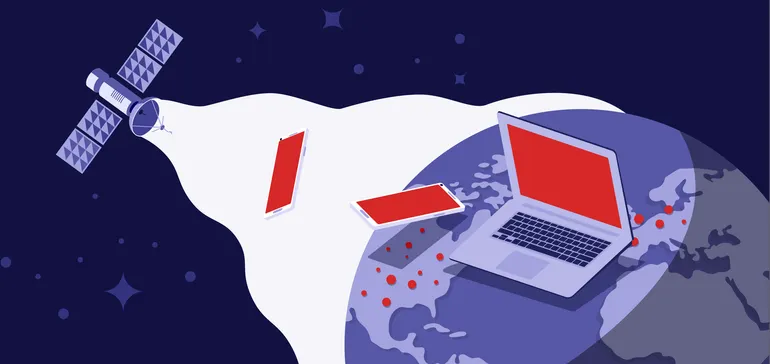
The U.S. Federal Communications Commission (FCC) allocated $9.2 billion in December of this year to help about 10 million rural residents bridge the digital divide. In the allocation of this "Rural Digital Opportunity Fund" (RDOF), Elon Musk's SpaceX became one of the largest beneficiaries, with its Starlink service receiving $885.51 million, but this decision immediately sparked widespread controversy.
Critics and industry experts have expressed concerns about Starlink's cost and its ability to deliver on SpaceX's ambitious promises. Despite the skepticism, the technology still has the potential to alleviate the digital divide that has plagued rural areas of the United States for years.
"The innovation here lies in deploying a large-scale network and serving potentially millions of consumers," said Tyler Cooper, editor-in-chief of BroadbandNow, an internet comparison and research organization. "This part, I wouldn't say it's unproven, but it's certainly not yet at the scale of deployment that SpaceX envisions."
Amazon and SpaceX's Double Bet
SpaceX has set ambitious goals for the Starlink project. The company says it hopes to deploy up to 42,000 low Earth orbit (LEO) satellites, and has already deployed 1,000 as of January. SpaceX says that using its rockets, it can launch up to 60 satellites at a time.
In regulatory filings with the FCC, SpaceX says the technology can provide internet speeds exceeding 100 megabits per second (Mbps), including in rural areas traditionally overlooked by internet companies. This speed can simultaneously meet the regular usage needs of up to five users.
However, SpaceX is not the only company involved in LEO satellite internet. Amazon has joined the competition through its "Project Kuiper," which has been approved to deploy 3,236 satellites and has committed over $10 billion to build the network.
Users need to install an antenna, satellite dish, or other receiver at home. These devices communicate with orbiting satellites via radio waves, connecting the satellite signal to a home modem. Data transmission from satellites in higher orbits can sometimes experience latency, while LEO satellites can significantly reduce this delay. The satellites communicate with each other and share the connection load in orbit, forming a mesh network that provides customers with more stable internet service.
"In an ideal world, we would push for universal fiber access, and that would be fantastic. Unfortunately, that's not realistic."
— Tyler Cooper, Editor-in-Chief of BroadbandNow
A Viable Option for Rural Areas
Analysts point out that rural residents are most likely to benefit from satellite internet, especially when existing operators cannot lay fiber to homes due to a lack of commercial return. Cooper explained: "Fiber deployment is extremely costly, especially in rural communities, because we have to consider the return on investment."
The technology has also gained more attention during the COVID-19 pandemic, which highlighted the widening digital divide. Unlike fiber, satellite services have become more reliable than in the past as technology has advanced—previously, bad weather often affected satellite connections. "We're seeing more robust satellite services that can penetrate weather and clouds," said Ryan Johnston, policy advisor for federal programs at the advocacy group Next Century Cities. "Early satellite services often couldn't receive signals on cloudy days, but now, satellite services in higher frequency bands can more easily penetrate clouds."
Technological Skepticism and Cost Issues
Despite the potential of satellite internet, there are still many doubts about the technology and the FCC's decision to award funds to SpaceX to provide services in 35 states. A major obstacle for internet equity advocates is the cost of the service, which could be a barrier for many potential customers.
SpaceX's Starlink service charges customers a $499 initial equipment fee during the testing phase, followed by $99 per month. Johnston believes this price may deter many rural Americans. "Many people using these types of services are low-income rural Americans," he said. "If they have to pay $100 a month, that could mean they either pay the broadband bill or buy groceries. Claiming this is the only option is a significant problem."
However, not all experts agree with the cost concerns. BroadbandNow's research indicates that if Starlink and Project Kuiper deliver on their promises, the addition of LEO satellite internet could save Americans over $30 billion by improving competition and lowering prices.
The technology itself also faces serious skepticism, with many experts calling it "unproven." During an online press conference hosted by the National Rural Electric Cooperative Association (NRECA) in February, opponents raised concerns. NRECA represents groups involved in rural broadband deployment and has submitted written comments to the FCC. "We're using public funds in the RDOF auction, which was designed to deploy proven technology, not to conduct R&D experiments for technology that may not connect Americans with real broadband," said NRECA CEO Jim Matheson at the press conference.
Participants on the media conference call called LEO satellites an unreliable service and questioned whether connection speeds could reach promised levels. Tim Bryan, CEO of the National Rural Telecommunications Cooperative (NRTC), questioned whether the satellite network and spectrum are robust enough to handle the expected number of users. "My concern is mainly about capacity—not one or two users, but what happens when users reach 20,000, 30,000, 40,000, or 50,000, because obviously the entire country must share the same constellation," Bryan said at the NRECA press conference.
A SpaceX spokesperson declined to comment on these criticisms, instead pointing to recent social media posts praising Starlink service, including the Washington State Emergency Management Division using the service to provide internet to a town rebuilding after wildfires, and a similar case with the Hoh Tribe in Washington.
"Glad to have @SpaceX Starlink internet support, emergency responders are helping residents of Malden, Washington, which was destroyed by wildfires earlier this month, rebuild their homes. #wawildfire"
— Washington State Emergency Management Division (@waEMD), September 28, 2020
Given that SpaceX is still refining its proof of concept, Johnston believes the FCC was too hasty in allocating funds. "While this money absolutely needs to go out into the world, I think the FCC gave it to satellite providers too quickly," he said. "The way SpaceX markets its product is quite unproven, and the way they view the problem is very limited."
FCC spokesperson Anne Veigle dismissed criticism of the RDOF auction process, saying the commission "took a technology-neutral approach, allowing companies to use different technologies to provide broadband to unserved areas." Veigle noted that the next phase of the program requires all winning bidders to submit long-form applications outlining their service plans. "No funds will be distributed until the commission determines that the long-form applications are complete and meet all program requirements," she said in an email.
Not a Panacea
For now, whether satellite internet can help narrow the digital divide remains to be seen. In fact, the FCC said in a recent report on internet availability that "data may overstate the availability of satellite service." The report continued: "While satellite signal coverage may allow providers to offer service to large portions of the country, overall satellite capacity may limit the number of consumers who can actually subscribe to satellite service at any given time."
Past false promises to bridge the digital divide have also raised concerns. The FCC awarded $789 million to CenturyLink and Frontier in 2015 to expand rural broadband. But both companies recently announced they missed deployment deadlines, a development Matheson called "disturbing."
For local governments, there are opportunities to partner with satellite companies on base stations and other ground infrastructure. But Jane Coffin, senior vice president of internet growth at the advocacy group Internet Society, said the only way to get good internet is to promote competition and let local communities invest in their own networks. A survey by the Broadband Equity Partnership echoed this view, with 70% of more than 120 respondents across 18 states saying local economic development agencies can play a key role in encouraging locally owned networks and infrastructure, rather than relying on large companies.
"You can't just rely on existing carriers," Coffin said. "Small, medium, and large networks all need to be available and interconnected to ensure traffic can be transmitted from one point to another... Through some small community networks, they can backhaul traffic to a satellite, or send their traffic, connections, or emails from a base station to a satellite, which transmits to another satellite in seconds, and then to another country."
"I don't think any single technology can solve the digital divide, because it's a problem with many layers."
— Ryan Johnston, Policy Advisor for Federal Programs at Next Century Cities
Francella Ochillo, executive director of Next Century Cities, said the goal of getting every household to 25 Mbps—which the FCC defines as the baseline broadband speed—is noble, but given the importance of the internet, it's not forward-looking enough. With the proliferation of Internet of Things devices in the coming years, she said this will put more pressure on networks. "We have to constantly think ahead, always looking for ways to connect people, but at speeds we'll need in the future," Ochillo said. "We need to think about the speeds we'll actually need 5, 10 years from now."
Experts also warn that merely deploying new technologies like LEO satellites is not enough to solve the nation's digital divide. The FCC estimated last year that just under 18 million people lack broadband, although broadband mapping has been criticized for failing to show the full scope of the digital divide. Estimates vary on the total cost of connecting everyone to broadband. When House Democrats reintroduced the LIFT America Act, they committed nearly $94 billion to reduce the digital divide.
Johnston said a holistic approach is needed, not only introducing new solutions but also helping people acquire the skills needed to fully utilize them. "I don't think any single technology can solve the digital divide, because it's a problem with many layers," he said. "There are accessibility issues, affordability issues, and digital literacy issues. So even if we can deploy the best satellite service to connect everyone in the country, we still need to address all these other issues before declaring the digital divide has been bridged."
