
Databricks launches agent-building tools, deepens partnerships with hyperscale cloud providers
On Wednesday, Databricks added agent-building capabilities and no-code data pipeline tools to its enterprise AI portfolio, and at its annual Data + AI Summit held last week in San Francisco, announced expanded cloud partnerships with Microsoft and Google Cloud. Agent Bricks, currently in beta, helps customers process unstructured data, build knowledge-assistant chatbots, and orchestrate multi-agent applications; the no-code tool Lakeflow Designer entered private preview. Additionally, Databricks extended its strategic collaboration with Microsoft, adding new Azure AI Foundry and Power Platform integrations, and plans to launch SAP Databricks on Azure within the year; its partnership with Google Cloud brings Gemini large models into the Databricks ecosystem.
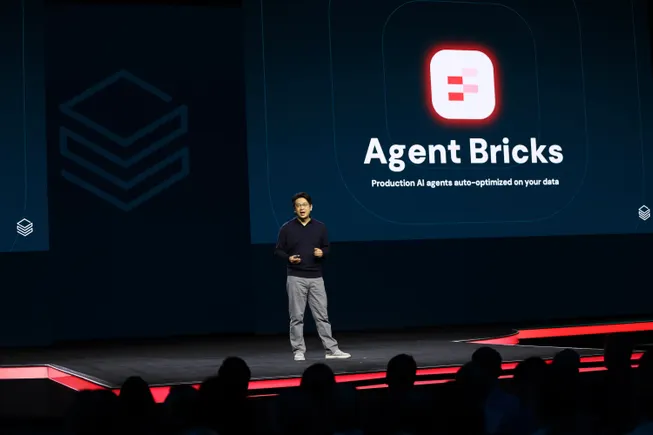
Data and AI company Databricks added agent-building capabilities and a no-code data pipeline tool to its enterprise AI portfolio on Wednesday. Last week, at its annual Data + AI Summit in San Francisco, the company also announced expanded cloud partnerships with Microsoft and Google Cloud.
According to the announcement, customers can use Agent Bricks, currently in beta, to prepare unstructured data such as emails, PDFs, and manuals for model ingestion, power knowledge assistant chatbots, orchestrate multi-agent applications, and customize chatbots and content creation tools. The company said in a separate press release that the no-code Lakeflow Designer studio will enter private preview.
"We are expanding the capabilities of our core audience—engineers—while also elevating the ability of everyone else to participate in this space," Bilal Aslam, senior director of product management at Databricks, told CIO Dive. "This means integrating structured data from enterprise applications like Salesforce, Workday, and NetSuite with PDFs from SharePoint and Google Docs."
As enterprises face data management challenges in adopting AI, vendors are stepping in to simplify multi-source integration and provide ready-made, task-oriented agent tools. In the race to break down data silos, barriers between vendors are also crumbling.
Databricks competitor Snowflake, in the data cloud space, connected its Cortex AI platform with Microsoft Azure OpenAI Service in Azure AI Foundry in February as part of its collaboration with the hyperscaler. The company also launched agent capabilities powered by Claude 3.5 Sonnet from model builder Anthropic in February, leveraging its alliance with Anthropic.
Databricks extended its strategic partnership with Microsoft around the joint Azure Databricks analytics platform, launched in 2018, by several years. The expansion includes cloud-native integrations with Azure AI Foundry and the Microsoft Power platform, with plans to deploy the ERP-based integration solution SAP Databricks on Azure later this year.
"We are delivering significant value to enterprises and IT developers by enabling tighter integration with the Azure ecosystem, from Azure AI Foundry and Power Platform to SAP," Judson Althoff, executive vice president and chief commercial officer at Microsoft, said in the announcement.
The alliance with Google Cloud dates back to 2021, bringing the hyperscaler's Gemini large language models into the Databricks ecosystem. According to the two companies, customers can access these models through SQL queries and secure endpoints, and pay for Gemini through Databricks contracts.
Databricks also indirectly strengthened its existing AI agreement with Salesforce by expanding its partnership with Informatica. Informatica, which Salesforce agreed to acquire last month for $8 billion, and Databricks jointly announced on Thursday the launch of Managed Iceberg Tables data transformation tools and the Databricks Lakebase PostgreSQL-compatible database, entering public preview.
Databricks announced the acquisition of Postgres startup Neon in May, just weeks before Snowflake agreed to acquire Crunchy Data, a similarly positioned database service provider.
The web of cross-platform integrations and acquisitions reflects the urgent need for enterprises to streamline data assets and enhance reliable generative AI capabilities.
"Most of our customers lack high-quality methods to evaluate AI agents," Hanlin Tang, chief technology officer of Databricks' neural networks division, told CIO Dive. "Agents built by customers sometimes recommend competitor products or hallucinate descriptions of products that do not exist."