
Trump's AI Regulatory Executive Order: Five Key Points for CIOs to Watch
U.S. President Trump established a voluntary review mechanism for frontier AI models through an executive order, with the Department of Homeland Security, the Department of the Treasury, the Office of the National Cyber Director, and NIST tasked to develop standards within 60 days. The order does not impose mandatory licensing, but CIOs should be wary of potential impacts from alternative mechanisms such as the Defense Production Act.
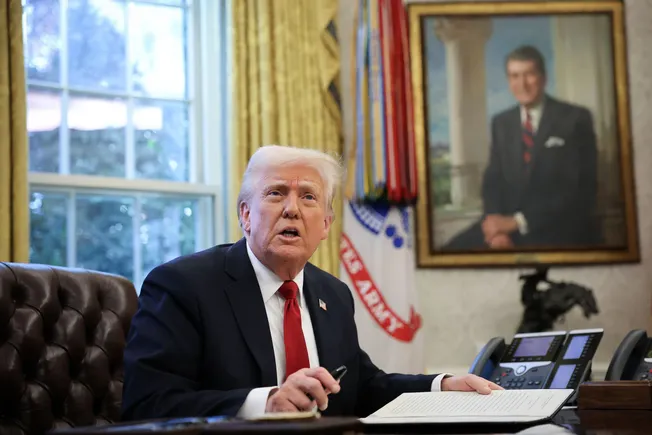
Technology leaders should closely monitor the downstream impact of the federal government's upcoming voluntary reviews of frontier AI models. The mechanism was established by an executive order signed by U.S. President Donald Trump on Tuesday,an executive orderestablished, about a week after hiswithdrawal of the initial proposal.
The directive creates a model review process designed to assess security vulnerabilities before models are publicly released. According to the order, its goal is to screen for national security concerns that AI models might raise—such as the type of issues Anthropic's not-yet-publicClaude Mythostriggered in April—while avoiding the introduction of "overly burdensome regulation."
The order requires the Department of Homeland Security, the Department of the Treasury, the White House National Cyber Director's Office, and the National Institute of Standards and Technology to determine review standards within 60 days.
Subsequently, the government will require relevant parties to provide model pre-release access for up to 30 days and allow selected critical infrastructure operators early access. The order, which Trump initially planned to issue before Memorial Day,was reportedly to require a 90-day review period。
Samir Jain, vice president of policy at the Center for Democracy and Technology, said in an email statement Tuesday that the order addresses the "real and growing cybersecurity threats" that U.S. businesses and infrastructure increasingly rely on. Jain said the order takes steps to address these threats, including pushing for "much-needed resources for state and local officials," while avoiding a mandatory licensing process for new models.
Jain told CIO Dive in May that he hoped the review process would be as voluntary as possible and governed by clear standards. The published order leaves gaps in some areas, which could confuse those responsible for technology decisions in enterprises.
"What remains unclear is what happens next if testing identifies a national security risk," Jain said in the interview. "Will the government attempt to block the model's release? Will it insist on mitigating these risks?"
He said the executive order should not become a tool for the government to penalize companies for political or other arbitrary reasons. The Center for Democracy and Technology intends to closely monitor the details of the review process, Jain added.
Executive action guide
Lydia Clougherty Jones, vice president analyst at Gartner, said in an email that the signals conveyed by the order are significant for CIOs.
"Voluntary cooperation is key, and the lack of direct regulation is notable," she said. "However, the policy drivers are national security and cybersecurity; this executive order applies only to frontier models that are not yet defined, and it primarily concerns cybersecurity issues."
Clougherty Jones noted that U.S. states that enact comprehensive or broad AI safety regulations could still face preemption challenges from multiple actors at the federal and state levels.
She added that although the order does not impose licensing requirements, mandate pre-market safety testing, or grant the government veto power over model releases, nothing prevents the government from using other mechanisms, such as the Defense Production Act, to influence companies' release decisions.
"The order also does not address the terms of federal contractor agreements, including controls over AI model capabilities and use," Clougherty Jones said.