
NFL CIO Michelle McKenna: The Growth of a Technology Leader Is Not a 'Sprint to the Top'; Accumulating Experience Is Crucial
Ahead of Super Bowl weekend, we revisit our interview with NFL Chief Information Officer Michelle McKenna. She spoke ahead of the 2018 draft about the growth path for technology leaders, the situation of women in the tech industry, and how the NFL leverages data analytics, AI, and omnichannel capabilities to enhance the fan experience. McKenna emphasizes that a career is not a 'sprint to the top'; lateral moves and accumulating experience are equally important.
Editor's Note: As Super Bowl Sunday approaches, we are republishing our interview with NFL Chief Information Officer Michelle McKenna. This year's Super Bowl was held at Atlanta's two-year-old Mercedes-Benz Stadium, whichis equipped with Wi-Fi and a distributed antenna systemto keep fans connected throughout the game.
The Super Bowl may be over, but the NFL never stops. With the 2018 draft kicking off on Thursday, the new season is already on the horizon.
For the NFL's technology division, summer is a critical time to reassess the technology roadmap and plan for the new season and the years ahead. This means pushing the sport to the forefront of technology while preserving the traditions fans cherish.
While improving operational efficiency, the NFL is also strengthening data analytics, artificial intelligence, and omnichannel capabilities to drive fan engagement and the game-day experience. With just over a year until the 100th season, this adds urgency to the rollout of major projects and new milestones.
Leading this technology strategy is Chief Information Officer Michelle McKenna. She previously served as CIO at Universal Orlando Resort, Constellation Energy, and Centex. Now in her seventh season with the NFL, as the league's first CIO, she has gained deep insights into technology careers, women's success in the workplace, and driving organizations forward in the digital age.
The path to the top is never a straight line
Like many CIOs, McKenna didn't start out in technology. She began in finance and public accounting, but after spotting a problem, she began working with Disney's IT department to explore how to extract data from legacy systems. A few years later, she found her niche in technology, bridging business and tech.
In today's world, people often worry that a change in job title or responsibilities will derail their careers, but staying open and flexible can actually open up entirely new paths to success.
"Sometimes you look at someone's career like a rock band that suddenly becomes famous—you don't see the countless nights they played to empty venues," says McKenna. When change comes, a lateral move doesn't necessarily mean a step down.
"If you look at male and female leaders, I think women are often more willing to take a zigzag path, so they tend to be more well-rounded, which also makes them extremely valuable in an organization," says McKenna. "Don't fixate on the next title and the next promotion; try to broaden your experience, because your career... it's not a sprint to the top."
Even CIOs who have already reached high positions sometimes still have to fight for a seat at the decision-making table. But as technology becomes increasingly embedded in business models, the presence and influence of the CIO in executive decisions is more important than ever.
"I think many CIOs have had to work hard to integrate into the business. I'm the opposite—I came into technology from a revenue-generating role, viewing technology as an enabler," says McKenna. "For almost my entire career, I've been deeply involved in the business, reporting directly or closely to the CEO or COO."
As the NFL's CIO, there is still much work to be done. Sports organizations are in the process of becoming technology leaders. With decades of accumulated player, game, and fan data now available in the cloud for advanced analytics, both on-field play and behind-the-scenes logistics are changing. These technological shifts have swept through every department of the NFL.
"I think the NFL's leadership team saw the need for a CIO role before it became obvious," says McKenna. "When I first got here, I did have to spend some time convincing people—like, why would the technology team be on the sidelines on game day."
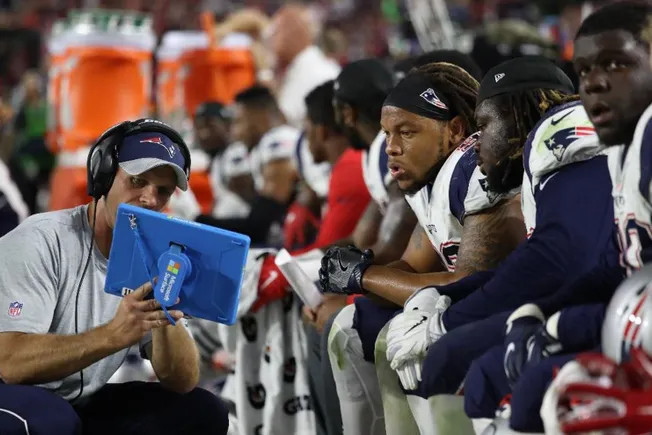
In the past, most game-day matters were handled by football operations, but with the deep integration of technology on and off the field, members of McKenna's team are now present at every game. During the season, they don't test any major systems, so most major overhauls or additions are done in the offseason.
To continuously deliver personalized experiences for fans and provide insights for the business, the NFL is investing in technology talent with relevant experience and bringing in corporate partners like Amazon Web Services and Microsoft. But attracting and retaining the right talent is a special challenge.
The secret to success
McKenna may make the journey sound easy, but she has built decades of business experience in a male-dominated field—especially at the leadership level. As more women enter engineering and development, this demographic is slowly changing, but the commitment to diversity is ongoing and far from over.
Although the players are all male, according to McKenna, the perception that the NFL is also a male-dominated culture is a misconception. However, simply bringing women into the organization and addressing the imbalance is not enough.
"It's never been about recruiting women to start a career, but about providing a workplace environment where they can balance life, motherhood, and so on—while continuing their professional development," says McKenna. For many women, the time when their careers take off often coincides with starting a family; companies are discovering that flexibility—especially in work arrangements—helps retain female employees and leaders.
Improving diversity also requires buy-in from the existing system. Bottom-up diversity initiatives may struggle to succeed without leadership support, and solving the problem requires internal awareness and a commitment to change.
"I think an overlooked story is that we also need men, need them to be our advocates and mentors," says McKenna. "I've had many mentors in my life, and what strikes me most is that most of them were men, and they were also my great supporters."
Having a mentor and advocate in the workplace is highly valued, and McKenna credits this as a key asset that pushed her to try technology, made her realize her worth, and ensured she had a seat at the decision-making table.
"It takes people who are not only interested in hiring you but are willing to pave the way for you—whatever that success looks like. That's the magic ingredient," she says. "If you do that for your employees—that is, develop them well enough that they could even leave you to pursue bigger things—then you're doing it right, because then you'll keep attracting top talent."
Within the NFL, McKenna is committed to ensuring employees build important professional relationships—although outside her leadership team, employees "already get enough" of that guidance daily. The NFL's senior technology leaders participate in a mentorship program funded by the NFL and run through the CIO Executive Council, pairing them with other CIOs.
A good leader and mentor can be the difference between an average employee and an exceptional one, helping them find their voice and place in the organization. Even McKenna herself took time to recognize the weight of her own contributions—and for any modern enterprise with a digital footprint, the value a CIO brings to the C-suite is indispensable.
"I was able to translate their technology ideas into business plans and business models that could secure funding and support within the organization—this translation from technology language to business language ultimately became the secret to my career," says McKenna.
