
Microsoft once turned around a reputation crisis. Can Facebook replicate its path?
This article reviews Microsoft's reputation crisis in the late 1990s due to antitrust investigations and its subsequent transformation journey, comparing it with Facebook's current trust challenges stemming from data privacy issues. Through analyses from multiple industry figures, it explores the possibilities and paths for tech giants to repair their reputations under regulatory pressure.
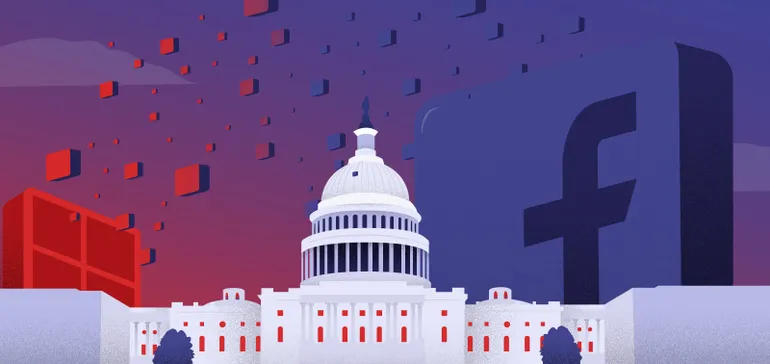
More than two decades ago, Bill Gates sat before Capitol Hill to defend Microsoft, a company that was approaching a monopoly with epic technological influence. In United States v. Microsoft, the tech company was accused of antitrust violations. Before the hearing, Gates sent an internal memo to Microsoft executives titled "The Internet Tidal Wave."
In the memo, Gates outlined his intention for the personal computing giant to defeat Netscape, a competitor "born" from the internet. He feared that "internet enthusiasts" would unite to build a cheaper solution than the personal computer. Because the internet "is the most important single development since the IBM PC," Gates believed Microsoft needed new strategies. He proposed bundling Internet Explorer with the Windows operating system. This memo later became key evidence against Microsoft and its anti-competitive practices.
The Conqueror Conquered
Gates's testimony foreshadowed the core issues facing today's tech giants, including trust and monopolistic ambitions. Since then, Microsoft has made a reversal, shedding the poor reputation that initially brought Gates to Capitol Hill. However, other tech companies and their founders seem not to have learned from Microsoft's lesson.
Innovators in big tech want to stay one step ahead of Washington. When some legislators serve in Congress for decades, the tech industry can easily maintain its lead. But maintaining that lead may come at a cost—the reputation of big tech.
"People are starting to lose confidence in our technological dominance," said Mike Margolin, chief digital officer at advertising agency RPA, in an interview with CIO Dive. Public trust in companies erodes through various channels, from unpopular business deals to unstable leadership, and most recently to password mismanagement incidents. But the influence of big tech makes it nearly impossible for the public to cut ties even if they want to.
Because Amazon, Google, and Facebook are involved in numerous industries, it is difficult for people to discern where one business ends and another begins. Ethical boundaries thus become blurred. Big tech knows that "our obsession is fuel." Regardless of which platform consumers use, their data is likely connected to third parties, Margolin noted. For example, "you can't quit Amazon," and even after deactivating an account, Amazon's reach extends beyond customer accounts into other retail models.
"These are companies that want to dominate the world, and then somehow think they are helping the world." — Kara Swisher, tech journalist and co-founder of Recode
Tech companies' ambitions are threatening their reputations. "These are companies that want to dominate the world, and then somehow think they are helping the world," tech journalist and Recode co-founder Kara Swisher told CIO Dive at an event in February.
In 1997, Sun Microsystems CEO Scott McNealy was called to testify before the committee because he was one of the few in the tech world willing to challenge Gates and the Windows maker. McNealy was not intimidated. "Microsoft today has the power to exercise predatory and exclusionary control over the very way we access the internet," McNealy told the committee. "We believe that, if unchecked, Microsoft will have a monopoly," which would allow it to break into other industries such as finance, media, and internet service providers.
The path McNealy once feared Microsoft would take is now strikingly similar to that of other companies. Google can arguably be described as a technology-based conglomerate. Facebook is also expanding its influence beyond its founding market. The social network has "bewitched" the world into thinking it is just a tech company capable of "managing and selling the benefits of its technology," Hillary Sale, a law professor at Georgetown University Law Center, told CIO Dive. "Great opportunity comes with great responsibility, and we have not yet seen these companies take responsibility for their choices," Sale said. Currently, "Facebook may be the worst example" because it has failed to address why its reputation has suffered repeated blows recently.
Sitting Before Capitol Hill
Last year, following the Cambridge Analytica scandal, Facebook CEO Mark Zuckerberg testified before Congress. He was brought to Capitol Hill to defend the company amid concerns over privacy and consumer trust. Although Gates and Zuckerberg were called to Congress for different reasons, their testimonies were similar in tone.
Both founders had to explain their technology to legislators who, more or less like the general public, had limited understanding of it. While legislators want to protect constituents, "the reality is they are trying to navigate a very chaotic environment," Margolin said. These companies have brought the public into an era where people freely use their technology but know little about how it works. "Once we discover the dangers of some of their choices, including selling private data for profit, regardless of the depth of our understanding, it raises legitimate concerns," Sale said.
"Great opportunity comes with great responsibility, and we have not yet seen these companies take responsibility for their choices." — Hillary Sale, law professor at Georgetown University
Both founders displayed a degree of resistance. Sale said Gates's performance before Congress was largely interpreted as "Who do you think you are to tell us what to do?" That strategy did not work for Microsoft—the company was found to have violated antitrust laws and subsequently reached a settlement with the U.S. Department of Justice. The essence of Gates's message in his congressional testimony was to leave innovators alone. Sale believes that as long as innovators do not produce unintended consequences, their choices should be left alone, "but that is completely unrealistic." Regulation exists precisely to avoid unintended consequences, not to stifle innovation.
In this context, Facebook cannot be left alone without consequences. Zuckerberg took "a long time to show remorse and appear willing to take responsibility," Sale said, which ultimately did not help Facebook in the long run. He initially refused to appear before Capitol Hill and instead sent Sheryl Sandberg to testify on his behalf, "which was a very significant statement, but it did not work in his favor," Sale said.
What Is the Key to the Reversal?
Today, the reputations of Gates and Microsoft are vastly different from those in the 1990s. Today, "if you combine Bill Gates's ambitions in the 90s with what he and his wife's foundation have done, I think that is the direction many people want tech companies to focus on," Margolin said. Microsoft has narrowed its focus to enterprise technology, striving to become a leader in cloud computing, artificial intelligence, and software as a service. "Leadership matters," Swisher said. Microsoft CEO "Satya Nadella is an excellent executive... Microsoft has returned to what it does best."
Gates is no longer at the helm of Microsoft, but Zuckerberg still firmly holds the CEO position. Facebook is a public company, but Zuckerberg maintains control over the board through a dual-class share structure, meaning he cannot be removed from the CEO position. "The weaknesses in its governance and choices can be partly attributed to these issues," Sale said.
Additionally, there are external forces compelling companies to change, whether they are ready or not. The General Data Protection Regulation (GDPR) and California data privacy laws are amplifying calls regarding trust, regulation, and big tech responsibility. As of March, 60% of consumers do not trust Facebook at all, according to a poll by NBC News and The Wall Street Journal.
"If you combine Bill Gates's ambitions in the 90s with what he and his wife's foundation have done, I think that is the direction many people want tech companies to focus on." — Mike Margolin, chief digital officer at RPA
"Facebook is clearly facing a user trust crisis," Dan McCormick, COO and co-founder of Constructor.io, said in an email to CIO Dive. However, the #deleteFacebook movement that arose after the Cambridge Analytica scandal has not been enough to bring the company down. Since last year, following more data breaches and Zuckerberg's bland call for "public discussion about the future of technology in society," confidence in Facebook has been "slowly eroded."
Yet the bad news continues. Recent reports indicate that Zuckerberg "oversaw plans" to use user data as "bargaining chips" in negotiations with partner companies, NBC News reported after obtaining leaked company documents. Partners that could curry favor with Facebook were rewarded with personal data, or deprived of data as punishment.
"At the end of the day, Facebook is nothing more than a Wall Street company, a chemical company, a tobacco company, and I want them to stop telling me how wonderful they are for the world," Swisher said. "They are just selling products, and I want them to sell products responsibly. I don't think that is too much to ask."
There is currently no reliable timeline for when Facebook might restore its reputation like Microsoft, but it can start the process. Companies like Facebook and Google have the ability to recover, provided they first avoid sharing personally identifiable information (PII) with third parties, McCormick said. "The meager benefits it might bring are far outweighed by the risk of losing user trust." McCormick stated that with today's machine learning algorithms, avoiding PII is feasible. Existing technology can "produce results by observing and aggregating anonymous user behavior... without needing to know the real identity of any specific user."
