
How Productivity Monitoring Tools Affect Compliance and Corporate Culture
As remote work becomes the norm, employers' need to monitor employee productivity has increased, but the use of monitoring tools involves complex legal and ethical issues. This article analyzes the prevalence of monitoring, legal frameworks, personal device management, and cultural impacts, and cites expert opinions to propose balanced recommendations.
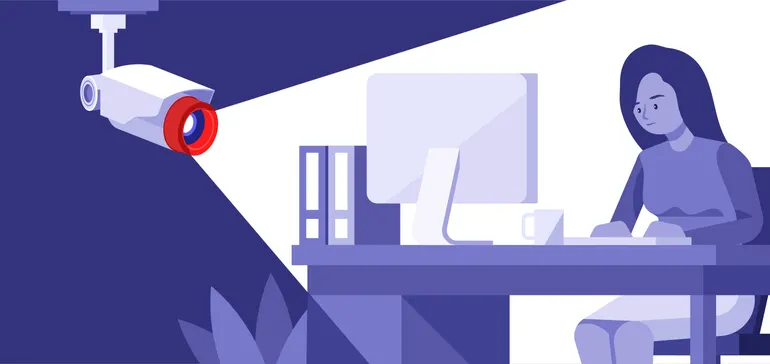
Remote work is not a new concept. Its path to popularity was paved by employees seekingflexibility, job satisfaction, and productivityFlexJobs and Global Workplace Analytics'analysisshows that remote positions grew by 44% over the past five years, with 4.7 million U.S. employees working remotely as of February 2020.
Although remote work is popular among employees, some employersremain hesitant, fearing that employees might slack off without supervision.
The COVID-19 pandemic forced skeptical employers to accept remote arrangements. For many companies, allowing employees to work from home was no longer a perk but the only way to stay operational. According to Willis Towers Watsonreport, the proportion of remote employees surged from 7% last year to 53%.
As remote employment becomes a necessity, employers' concerns about working from home may become more pressing.
After all, if employees are not in the office, how can managers ensure their productivity? If they cannot patrol workstations, how do they know whether employees are working or scrolling through Twitter? How can they ensure company information is secure? How can they prevent misuse of company devices?
A common solution: employee monitoring
Adam Forman, a labor and employment attorney at Epstein Becker Green, says companies can use various monitoring technologies to address productivity and security concerns, including video, audio, and screenshots, to measure productivity.
Fred Cate, a senior researcher at Indiana University's Center for Applied Cybersecurity Research, notes that such employee monitoring, while intrusive, is quite common.
"I would be surprised if there were no monitoring," he says. Employers look at employees' use of intellectual property, workload, login and logout times, and other information.
Eli Sutton, vice president of global operations at Teramind (a provider of employee monitoring and insider threat detection), says interest in monitoring has risen since the pandemic prompted remote work. "Over the past few months, interest from new and existing clients in the licenses needed for home environments has been more than three times the usual level."
Sutton says monitoring software helps employers understand how employees use company time, including ensuring productivity and maintaining the same level of security as in the office. Recent research shows that since employees began working from home due to the pandemic, about30% of employee accounts globallyhave been compromised.
Legal consequences: complex and difficult
Although monitoring in the office is widely accepted, can employers monitor employees working from home? Forman says it can be both yes and no.
"The laws regulating employer monitoring of employee activity are intricate," Forman says. In other words, the situation is complicated.
Public sector employees and private sector employees have different protections. Additionally, there are state regulations,the Electronic Communications Privacy Act of 1986, and numerous laws such as the National Labor Relations Act. Forman says these regulations provide guidance for employers but also often offer conflicting exceptions.
Forman advises that employers wishing to monitor employees should establish written policies or procedures, similar to social media policies or electronic technology policies, informing employees they may be monitored, thereby eliminating expectations of complete privacy.
Monitoring in the age of personal devices
Employers can monitor employees using company devices, but the situation becomes trickier when employees use personal devices. "You might want to use technology to bypass concerns," Forman says.
For example, companies can require employees to install a mobile device manager to access company documents. "The manager creates a sandbox within the device, and all company information is stored there," Forman says.
If the phone is lost, the company can wipe corporate data while preserving personal information. If an employee leaves, they also cannot take away the "crown jewels" of information.
Some monitoring providers offer customizable options. For example, companies using Teramind software can decide which information to monitor, Sutton says. If employees do customer service work, the company might use audio components to evaluate call quality and check for background noise that could interfere with customers.
Reducing the "creepy" factor
Employers may have many reasons to monitor employee behavior, but they should be aware of negative impacts. Forman says employers do not want to be seen as overly intrusive.
When employees are unaware and employers install spyware to turn on cameras, read emails, or listen to calls, it can trigger backlash. In some cases, such actions are legal, but employers may still face consequences.
Cate says employers may learn more about employees than expected. Monitoring might uncover harassment or health information affecting work. Once employers know, they may have legal obligations to act.
"Can" does not mean "should"
Rhiannon Staples, chief marketing officer at HRIS platform Hibob, believes that beyond compliance issues, monitoring remote employees' productivity is not a good strategy. Employers mistakenly rely on monitoring technology to act as managers' eyes and ears. "Monitoring cannot replace leadership."
Staples says technology does not always accurately reflect productivity. If a monitoring system takes random screenshots, it may miss all of an employee's work, such as phone calls or planning time.
Monitoring within fixed working hours cannot capture tasks performed outside the workday. Especially now, as employee schedules become more flexible due to balancing family responsibilities, employers relying on point-in-time data may not get the true full picture.
Staples believes that if managers communicate expected outcomes, there is no need to monitor employees. "Whether you finish work at 11 p.m. or 3 p.m., as long as you deliver before the deadline, that is the strongest message."
Staples acknowledges that this approach does not fit all roles, but it is feasible for many white-collar remote positions. "Manage by results, not by output."
Sutton counters that employee monitoring can foster a better work environment. Monitoring remote employees just as in the office gives employees the freedom to work from anywhere.
Overall, monitoring remote employees has both pros and cons. Cate advises that companies considering monitoring should first clarify their needs. If it is for performance evaluation or suspected theft, employers should use targeted tools.
Forman says the key first step is to eliminate privacy expectations. When monitoring, do not overdo it. "Use a scalpel, not a cleaver."