
Big Data

Enterprise AI Adoption Highlights Urgency of Data Process Upgrades
As enterprises expand AI adoption, data management and governance have become focal points. A Harris poll reveals that nearly 90% of leaders are concerned about data privacy, and over four-fifths of decision-makers report that data ownership has shifted. Experts advise CIOs to assess current practices, upgrade data processes, and pay attention to compliance and synthetic data applications.

Capital One Initiates Discover Integration Preparations, Focusing on Technology Migration and Global Acceptance Expansion
Capital One has received regulatory approval to acquire Discover and is now moving forward with integration efforts. The company expects the deal to close on May 18 and reaffirmed its goal of achieving $2.7 billion in cost savings by 2027, though the timeline has been delayed by approximately six months from the original plan. On the technology front, Capital One will migrate Discover's credit card business to its own technology stack and plans to undertake a multi-year modernization of the Discover network.

Kyndryl launches SAP service suite derived from its own migration experience
Kyndryl launches Kyndryl Data Transformation Suite for SAP Solutions, which is based on its own 18-month ERP migration experience and aims to help enterprises simplify migration to SAP S/4HANA Cloud ERP. Company executives emphasized that migration is not one-size-fits-all and requires building a data foundation to leverage AI capabilities.

AI Data Readiness: Ten Key Questions CIOs Must Answer
Just as humans need a good diet to maintain health, AI equally relies on high-quality data. Incorrect data types and poor data hygiene can undermine an enterprise's AI ambitions before a project even begins. This article compiles advice from technology leaders and market analysts, proposing ten questions CIOs should ask themselves, and citing perspectives from Gartner, Sierra Ventures, and Expedia executives, emphasizing the irreplaceable nature of foundational data work.

With AI Goals in Mind, How CIOs Can Calibrate Enterprise Data Strategy
As enterprises accelerate AI adoption, data management challenges are amplified. A Gartner survey shows that nearly two-thirds of organizations lack or are unclear about having AI-ready data management practices. Experts advise CIOs to start by assessing the current state and identifying data gaps, while focusing on key factors such as data diversity and lineage, to develop an effective AI data strategy.

Oracle Cloud Expansion Surpasses One Hundred Regions
During its fiscal third quarter 2025 earnings call, Oracle announced that its total number of global cloud regions has surpassed 100, reaching 101. Infrastructure and software services revenue grew 23% year-over-year to $6.2 billion. Although its market share still lags far behind the three major hyperscale cloud providers, the company is accelerating its catch-up through large-scale investments and partnerships.
Technology Industry Alliance Focuses on Data Quality, Jointly Promotes Provenance Standards
Cisco, IBM, Intel, Microsoft, and Red Hat jointly sponsor the establishment of the OASIS Data Provenance Standards Technical Committee to refine and promote cross-industry data provenance standards. The committee will hold its first meeting on April 8, with the goal of launching widely usable metadata quality metrics within 12 to 18 months.

Technology and Talent Shortages Constrain the Implementation of Generative AI Strategies
The latest Pluralsight survey reveals that although most enterprises have formulated short-term AI plans, the lack of long-term strategies, inadequate data infrastructure, and talent gaps remain major obstacles. Only a few enterprises have achieved large-scale deployment and created significant value.
Observability urgently needs a paradigm shift: from data accumulation to goal-driven intelligent analysis
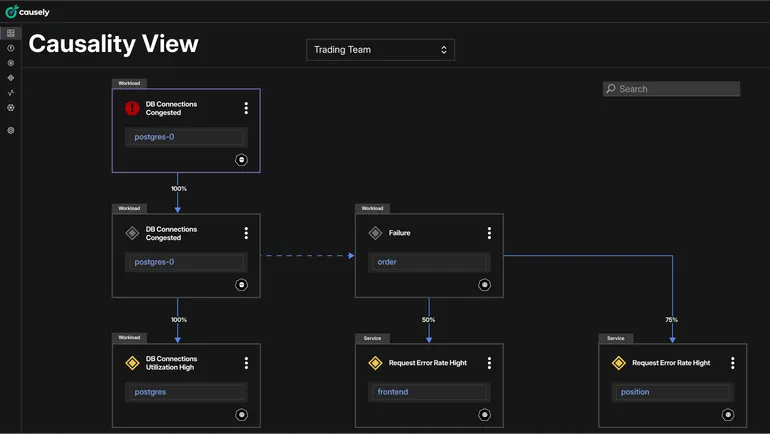
The author, with over thirty years of IT operations experience, believes that current observability practices fail to address fundamental issues and are instead worsened by data explosion, tool fragmentation, and increased manual troubleshooting burdens. The article proposes shifting from bottom-up data collection to top-down purpose-driven analysis, and explores Causely's paradigm shift philosophy and the potential of Agentic AI in IT operations.

Enterprise data governance shortcomings erode trust and hinder AI project implementation
Semarchy's latest survey reveals that deficiencies in enterprise data management and governance are having a growing impact as AI adoption expands. Among 1,050 respondents, nearly all business leaders acknowledged encountering AI-related data quality issues, primarily attributed to privacy compliance constraints, duplicate records, and inefficient data integration. These obstacles have led fewer than half of leaders to believe their annual AI goals are achievable, and have triggered declining trust in AI outputs, project delays, and increased costs. Semarchy CTO Craig Gravina emphasizes that CIOs need to prioritize data cleanliness and integration, and promote collaborative governance, to bridge the gap between strategy and execution.