
What Exactly Is a Quantum Computer? Clarifying Concepts, Roadmaps, and Industry Status in One Article
Behind the quantum computing investment boom, enterprises must first clarify its technical essence and industry landscape. Based on expert insights from Forrester, Intel, IBM, and others, this article analyzes the roadmap differences between general-purpose and special-purpose quantum computers, error correction challenges, progress by major vendors, and early application cases in fields such as materials science and finance, providing a reference for assessing risks and opportunities.
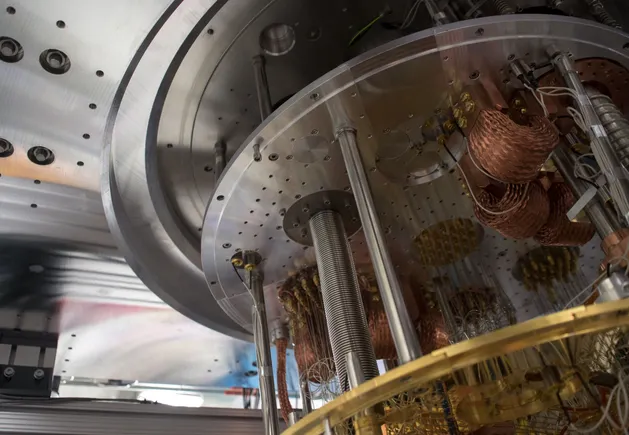
To build a sound business case for quantum computing and determine whether the investment risk is acceptable, one must first understand what quantum computing truly is, and then clarify hardware and software options, as well as metrics for measuring success.
According to Brian Hopkins, Vice President and Principal Analyst at Forrester, speaking with CIO Dive, some participants are racing to achieve "quantum supremacy"—that is, using quantum computers to solve theoretical problems that classical computers cannot. But first, they need a working quantum computer.
Hopkins noted that quantum computers can be broadly divided into two categories:
- Scalable general-purpose computers: Capable of understanding and executing logic like classical computers, with error correction capabilities, able to solve a wide range of problems without specialized customization.
- Specialized computers: Use quantum annealing technology, targeting domain-specific optimization problems.
Error correction techniques that produce stable, fault-tolerant qubits are key components of general-purpose computers, because physical qubits quickly become unstable. However, experts generally believe that such computers are at least a decade away. Hopkins said that specialized computers attempt to bypass the stringent requirements imposed by error correction.
There remain doubts about whether the industry can truly achieve error correction. Hopkins stated that researchers can currently correct only a small number of qubits, but for applications such as breaking encryption schemes, the number of qubits requiring correction could reach thousands or even millions.
Microsoft, Intel, and Google are all developing general-purpose, scalable quantum computers. Hopkins believes Microsoft is the "dark horse" in this field, betting ontopological qubits, and believes this technical route could achieve error correction earlier than IBM or Google. But Microsoft has yet to produce a working quantum computer, and until it has a prototype with a few qubits, scaling challenges must be set aside.
Intel, meanwhile, is developing both superconducting qubits and spin qubits. According to Jim Clarke, Director of Quantum Hardware at Intel, speaking with CIO Dive, spin qubits seem more likely to scale to larger sizes in the long term. The company will ultimately choose one qubit type—though it may differ from what is currently being developed—depending on whether more promising alternatives emerge.
Collaboration is key to driving progress
Similar to blockchain, quantum technology is surrounded by a great deal of hype, which may actually hinder the healthy development of the technology. Clarke pointed out that because all parties expect to find the "gold mine" first, companies tend to favor internal R&D over industry collaboration. But any technology that is at least a decade away from delivering results should foster more teamwork.
In the current industry environment, collaboration "may not be at the level it should be, and perhaps for that reason, quantum computing is progressing somewhat more slowly than it would with broad collaboration between industry and academia," Clarke said. Additionally, because companies use different architectures and qubit approaches, finding a common language is itself a challenge.
He believes that focusing on higher-level architectures, or collaborating around common challenges and applications, can help industry, academia, and government bridge their differences—because in the coming years, without stronger collaboration, opportunities will be missed.
In June of this year,the National Quantum Initiative Actwas introduced in the Senate, proposing to establish federal programs to accelerate and coordinate quantum R&D, especially through cross-agency and public-private partnerships. Clarke said the act could help the United States maintain its lead in the global quantum race, but funding should be allocated by project or grand theme, rather than directly to individual researchers or institutions.
Bringing more talent into the field to drive innovation is also crucial. There is a misconception that working in quantum requires quantum expertise. In reality, many researchers come from backgrounds such as materials, device physics, lithography processes, or system architecture, Clarke noted. Quantum experts certainly exist, but the number of graduates produced by universities is far from meeting industry demand—a common problem across many technology fields.
Even if quantum supremacy is achieved, not all quantum computers will be universal. In fact, due to extremely high barriers in funding, resources, and talent, very few companies will be able to build quantum computers.
Cloud-based models will help make the technology accessible to researchers who cannot access hardware. IBM was the first to offer quantum computing capabilities in the cloud, and IBM Q Network members can access hardware, software, and expertise to advance their projects. Cloud-based quantum computing capabilities will become an important channel for the quantum software market, which is the area of greatest potential opportunity in this field.
Early explorers
Quantum software will follow the pattern of traditional software, providing domain-specific solutions and algorithms, and several areas are already emerging. According to Jeffrey Welser, Vice President and Laboratory Director at IBM Research, speaking with CIO Dive, most of IBM's partners to date are concentrated in materials science, chemistry, and banking and financial services. Materials science and chemistry are expected to be the first quantum applications to generate real value.
JSR Corporation has been working with IBM Q Experience since last year. In an email statement to CIO Dive, Yuuya Oonishi, a researcher at the company, said the company believes quantum chemistry can fill the gaps in classical computing when it comes to generating high-precision molecular calculations. But starting a quantum computing project is not plug-and-play.
Oonishi said the greatest benefit JSR has gained from the collaboration is knowledge transfer, such as face-to-face instruction from researchers, sample code for molecular calculations, and an in-house researcher stationed at the IBM Q Keio Hub. Although the company has not yet used the technology for commercial operations due to immature algorithms, it is accelerating improvements in computation time and model scale. By keeping pace with improvements and growth in the field, JSR can obtain the latest information to determine which technical components are of practical value to it.
Quantum chemistry applications are particularly noteworthy because, compared to other areas, it is easier to build a clear business case for their technical value, allowing for a reasonable assessment of investment risk. Hopkins cited the example of a company producing electric vehicle batteries that could use quantum chemistry to explore a battery solution with performance comparable to Tesla's but with a different composition that does not rely on expensive elements.