
After the Silicon Valley Bank crisis, the threshold for reviewing technology enterprise suppliers has been raised
After Silicon Valley Bank (SVB) was taken over, financing channels for technology startups were blocked, and demand increased among enterprise IT departments for financial reviews and backup plans for suppliers. Multiple CIOs and analysts pointed out that supplier due diligence should be conducted in advance, with attention paid to hidden dependencies and merger and acquisition risks.
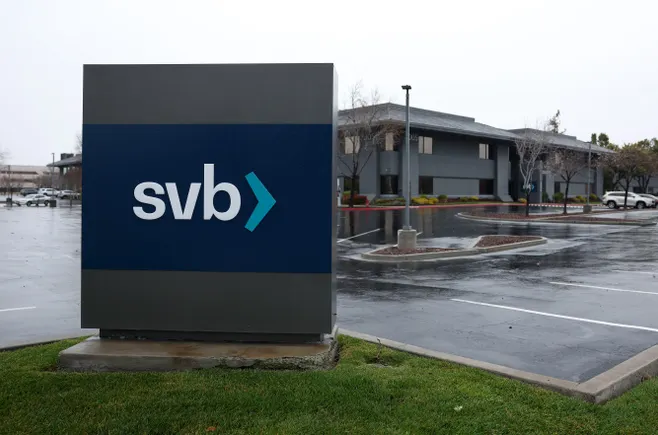
As federal agencies review bids for Silicon Valley Bank, the bridge bank maintains daily operations, leaving the tech startup ecosystem in a state of uncertainty.
Previously, venture capital funds flowed through Silicon Valley Bank to startups, supporting their growth, but inflation and rising interest rates have already put pressure on this pipeline. Although the downstream impact on funding and innovation remains unclear, the potential consequences have been enough to prompt companies to re-examine their supplier portfolios.
Brad Haller, senior partner in the mergers and acquisitions practice at technology consulting firm West Monroe, said in an email that short-term disruption has cast doubt on the tech startup ecosystem, a sentiment that will persist until the market regains confidence in cash flow.
"This delays the innovation process of the tech economy as a whole," Haller said.
When federal authorities stepped in to guarantee existing deposits after a bank run forced the takeover, tech leaders at companies that did business with Silicon Valley Bank may have temporarily set aside direct concerns about supplier viability. But tech startups themselves are volatile, and doubts about their stability remain.
Ronak Doshi, technology partner at IT research and advisory firm Everest Group, noted that Silicon Valley Bank's support role extended beyond banking to "social events, summits, and product, risk, and financial advisory services."
The institution also expanded the pool of available capital. Venture debt, a special type of loan for early-stage, high-growth startups that have funding but lack positive cash flow, was one of Silicon Valley Bank's core businesses.
"They were a key venture debt lender," said Scott Bickley, business lead and principal research director at Info-Tech Research Group, which focuses on vendor management and contract review. "They provided loans based on the size of startups' venture capital, allowing companies to obtain additional financing beyond their core equity."
The collapse of Silicon Valley Bank also disrupted credit lines essential to business operations. Thomas Phelps, CIO and senior vice president of corporate strategy at Laserfiche, a software company in Long Beach, California, told CIO Dive that this could create short-term problems for some startups.
According to Phelps, Laserfiche has contracts with more than 100 software and IT service providers, but only about a dozen of them had business relationships with Silicon Valley Bank.
Although these providers are currently safe, there is still some risk in the broader ecosystem, Phelps said.
"IT leaders should realize they still have some buffer time now," Phelps said. "But what happens if these tech startups lose access to credit in the future?"
Long-term concerns
Wendy Pfeiffer, CIO of Nutanix, a cloud software company headquartered in San Jose, said during a March Wall Street Journal CIO Network panel discussion that the turmoil in Silicon Valley could permeate the middle of enterprise IT portfolios through third-party suppliers dependent on the supply chain.
"I worry that three months from now, some of their key components could be compromised," Pfeiffer said.
As the cost of capital rises and lenders become more cautious, startups that survive the initial crisis may face additional risks.
"Higher-quality companies will survive, but a lot of innovation could be affected," Vineet Jain, CEO and co-founder of Egnyte, a Silicon Valley software company, said during the panel discussion.
Forrester noted that supplier risk has always been a concern for enterprises, but third-party risk should now become a more prominent issue. In a recent blog post, the research firm said that while innovation from startups will continue to be introduced, rigorous review processes should become the norm.
Forrester recommends that IT leaders continue testing promising products while mitigating risk by reviewing suppliers' financial health and identifying backup suppliers with similar offerings.
"Supply chain and hidden dependencies are always on my radar," Jason Conyard, CIO and senior vice president of VMware, a cloud computing company in Palo Alto, California, told CIO Dive. "Business continuity planning involves not just earthquakes and hurricanes, but also supply chain challenges, geopolitical situations, and economic uncertainty."
Greater scrutiny
Supplier review is a core part of building stability, resilience, and security in enterprise IT.
"When you bring a new supplier into your technology ecosystem, you must assess security data privacy impacts, as well as the risk of third-party suppliers providing services and technology," Laserfiche's Phelps said.
If a supplier is publicly traded, Phelps reviews its financial reports. For private companies, the process is more complex.
"I want to know how long they've been in business, who the founders are, what funding round they're in, and how much cash they hold," Phelps said.
Understanding a supplier's partners is equally important, not just in banking but also in the technologies and services that could disrupt the supply chain.
"Many suppliers, even tech startups, rely on other companies' services to provide services to you, so things can get complicated quickly," Phelps said.
As the Silicon Valley Bank situation settles, Forrester expects M&A activity in Silicon Valley to increase, as companies prepare to opportunistically acquire struggling startups. This could also bring risks, altering the relationship between suppliers and customers.
"Suppliers could shut down quickly," Phelps said. "In our process, we look at contract terms with these suppliers, including what happens if a supplier is acquired by a competitor, and how to retrieve data when exiting an agreement."
For startups, self-review may also be necessary, especially regarding banking.
"Everyone is most concerned about the treasury and diversification," AJ Bruno, co-founder and CEO of software startup QuotaPath and a former Silicon Valley Bank customer, told CIO Dive. "Now, ensuring we take a multi-threaded approach is our fiduciary responsibility, which has never really been realized in the past."
Asking startups which bank they use and whether they have M&A or IPO plans has now become a priority.
"We've asked similar questions in the past, but now we ask more often and more deeply," Phelps said. "And these questions come at the beginning of conversations, not the end."